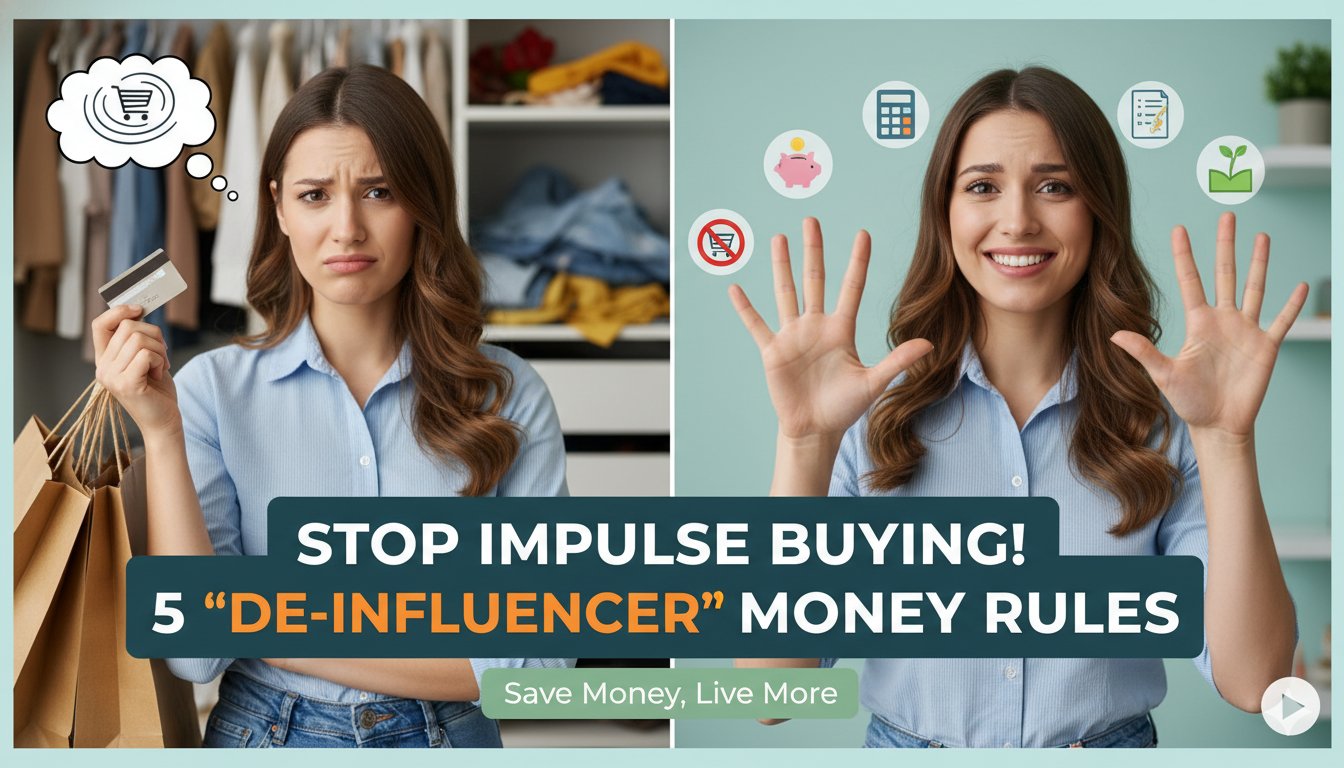
“In an era where Americans carry an average of over $6,700 in credit card debt and impulse purchases account for a significant portion of monthly spending—often hundreds of dollars—these de-influencer rules provide a roadmap to reclaim control, prioritize needs over wants, and redirect money toward real financial progress.”
5 Money-Saving Rules From a ‘De-Influencer’ To Correct Impulse Buying Habits
The rise of de-influencing counters the endless stream of “must-have” recommendations flooding feeds on platforms like Instagram and TikTok. These creators emphasize mindful consumption, questioning hype around trending items, and focusing on long-term value rather than short-term dopamine hits from purchases. Drawing from common de-influencer advice circulating in 2026, here are five powerful rules to break the cycle of impulse buying and foster sustainable money-saving practices.
Rule 1: Remember What’s Normal and Resist the Hype of Trends Social media often distorts reality by showcasing luxury lifestyles, viral products, and limited-edition drops as everyday essentials. De-influencers stress grounding yourself in what’s actually normal for most households. Before adding anything to your cart, ask: Is this something people genuinely need, or is it amplified by algorithms and marketing? Trending skincare gadgets, fashion hauls, or kitchen appliances hyped for a season rarely deliver lasting utility. Instead, stick to timeless basics that serve real purposes. This mindset shift alone can prevent hundreds in annual spending on items that lose appeal quickly. Many Americans report that recognizing “normal” living—without constant upgrades—frees up cash for emergency funds or investments.
Rule 2: Implement the 24-Hour (or Longer) Waiting Rule One of the most repeated de-influencer tactics is enforcing a deliberate pause before any non-essential purchase. Add the item to a wishlist or screenshot it, then wait at least 24 hours—some extend this to a week or even a month. In most cases, the initial excitement fades, revealing the purchase as unnecessary. This combats the instant-gratification design of online shopping, where one-click buying exploits emotional triggers like boredom, stress, or FOMO. Studies show impulse buys often stem from these fleeting urges, and delaying them leads to fewer regrets and more saved money. Track how many “wants” vanish after the wait; over time, this builds discipline and reduces monthly outflow significantly.
Rule 3: Build and Maintain a Detailed Wishlist with Regular Reviews Rather than reacting to every appealing product, channel desires into a curated wishlist. De-influencers advocate updating this list frequently—adding items as they catch your eye but reviewing it weekly or monthly to prioritize truly meaningful ones. This separates genuine needs or long-desired items from impulsive whims. Cross off or delete entries that no longer excite you. Pair this with tracking spending in categories to spot patterns, such as frequent hits on beauty or tech. The exercise promotes intentionality: if an item survives multiple reviews and fits your budget, it’s more likely worth buying. This habit has helped many cut impulse spending by redirecting focus from accumulation to mindful selection.
Rule 4: Question Every Purchase with Key Probing Questions Before checkout, run through a set of critical questions popularized by de-influencers: Do I already own something similar? Will this add real value to my life in six months? Could I borrow, buy used, or go without? Is this solving a problem or just filling an emotional gap? Am I buying because of an influencer’s endorsement or genuine need? These prompts expose the difference between needs and wants, especially when ads create artificial urgency through “limited stock” or “exclusive deals.” Incorporating self-reflection reduces emotional spending tied to stress or trends. Over time, answering these honestly can slash unnecessary outflows, allowing more allocation to savings, debt repayment, or experiences that matter.
Rule 5: Minimize Triggers and Automate Positive Financial Habits De-influencers highlight environmental cues that fuel impulses: endless scrolling, targeted ads, marketing emails, and even store layouts. Take proactive steps like unsubscribing from promotional lists, muting shopping accounts, using ad blockers, or setting app time limits. Replace shopping as a default activity with free alternatives—walks, reading, or hobbies. At the same time, automate savings transfers and bill payments to prioritize future security over present temptations. When money moves automatically to high-yield accounts or debt reduction, it’s harder to spend impulsively. This dual approach—removing negatives while building positives—creates lasting change. Many who adopt it report breaking cycles of living paycheck to paycheck.
| Rule | Core Action | Expected Benefit | Common Example |
|---|---|---|---|
| 1. Remember What’s Normal | Ground in reality vs. social media hype | Avoids trend-chasing waste | Skipping viral $200 gadget that’s rarely used |
| 2. 24-Hour Rule | Delay non-essential buys | Reduces regret purchases | Adding clothes to cart, forgetting by next day |
| 3. Wishlist Maintenance | Curate and review desires | Promotes intentional buying | Keeping only 3-5 survived items from monthly adds |
| 4. Probing Questions | Self-interrogate every want | Distinguishes needs from emotions | Asking if item solves real problem or boredom |
| 5. Trigger Reduction & Automation | Limit exposure, auto-save | Builds barriers to impulse | Unsubscribing emails + auto-transfer to savings |
These rules, rooted in the de-influencer ethos, empower everyday Americans to combat rising credit card balances—now exceeding $1.28 trillion nationally—and redirect funds toward stability. By treating consumption critically, you not only save money but regain control in a world engineered for constant buying.
Disclaimer: This is for informational purposes only and does not constitute financial, investment, or professional advice. Individual circumstances vary; consult qualified professionals for personalized guidance.