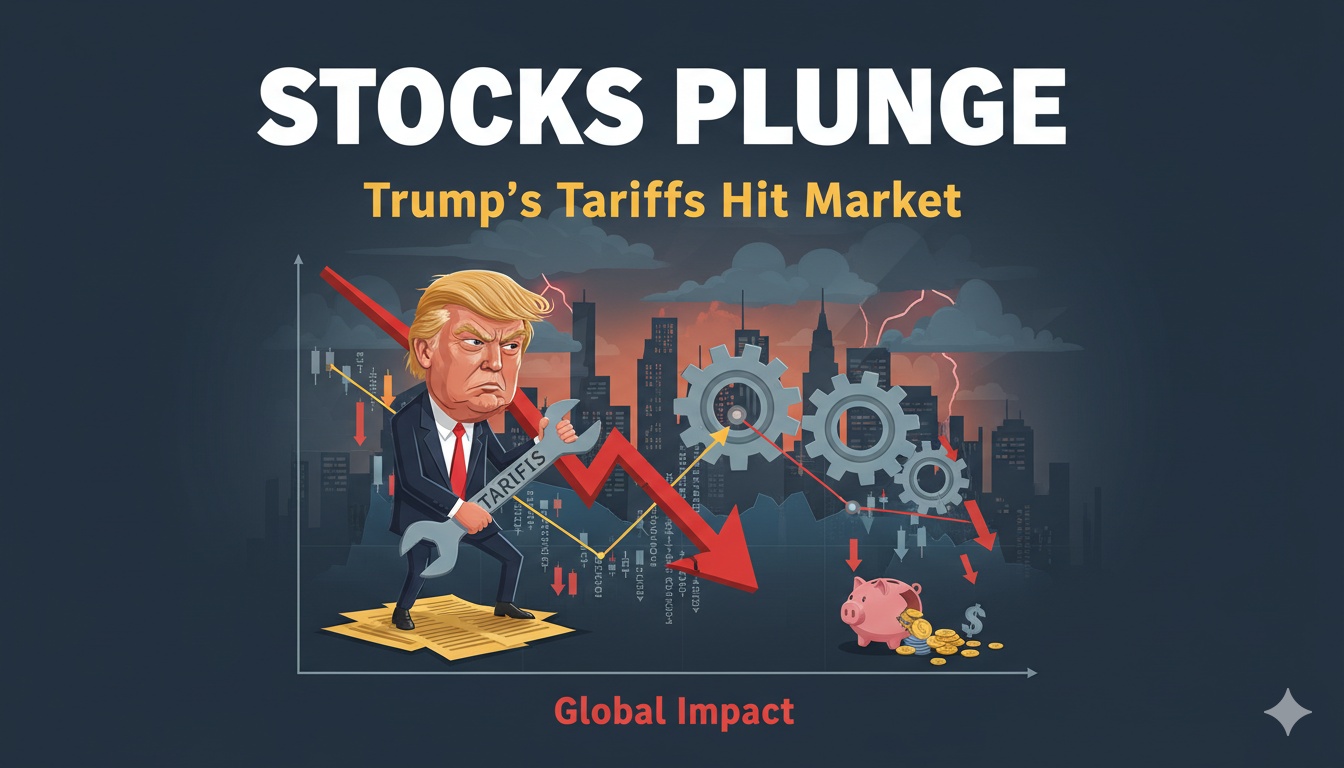
In a cautious trading session, major U.S. stock indices edged lower on Monday following President Donald Trump’s weekend announcement to raise a new global tariff to 15% from an initial 10%. The move comes as a direct response to the Supreme Court’s recent ruling striking down his broader emergency tariffs, injecting fresh uncertainty into trade policy and investor sentiment. While the declines remained modest compared to prior volatility, sectors sensitive to international trade showed notable pressure, with the Dow falling around 700 points in early action before stabilizing somewhat.
Market Reaction to Tariff Escalation
U.S. equities opened lower Monday, reflecting investor concerns over the president’s swift pivot to alternative tariff mechanisms after the Supreme Court’s decision invalidated key portions of his previous import duties imposed under emergency powers. The Dow Jones Industrial Average declined approximately 1.4%, shedding over 700 points at points during the session, while the S&P 500 dropped about 1%, and the Nasdaq Composite fell around 1.2%. These moves marked a reversal from Friday’s gains, when markets had rallied on the initial news of the court striking down the sweeping tariffs, viewing it as a potential reduction in trade war intensity.
The tariff adjustment, enacted under Section 122 of the Trade Act of 1974, allows for a temporary duty of up to 15% on imports to address balance-of-payments issues, limited to 150 days unless extended by Congress. President Trump first implemented a 10% global tariff late Friday, only to increase it to the maximum 15% over the weekend via social media announcements. He further warned that countries “playing games” with existing trade deals could face even steeper levies or additional measures like license fees, heightening perceptions of ongoing policy unpredictability.
Sector Impacts and Broader Implications
Trade-exposed sectors bore the brunt of the selling pressure. Importers, retailers, and manufacturers reliant on global supply chains saw shares weaken as higher import costs loomed. Consumer discretionary names and industrials with significant overseas exposure lagged, while some domestic-focused industries held up better amid hopes that tariffs could incentivize reshoring over time.
The dollar weakened against major currencies, including safe-havens like the yen and Swiss franc, as traders reassessed U.S. trade risks. Treasury yields dipped modestly, signaling caution over potential inflationary pressures from tariffs versus fiscal uncertainties, including questions around refunds for previously collected duties now deemed invalid.
International reactions added to the unease. The European Union postponed aspects of trade agreement ratifications, and other partners expressed concerns over renewed disruptions. Global stocks in Asia and Europe also trended lower in response.
Key Market Levels (as of Latest Trading)
Dow Jones Industrial Average: Down ~1.4% (around 48,900 level)
S&P 500: Down ~1% (near 6,840)
Nasdaq Composite: Down ~1.2% (around 22,600)
These figures reflect intraday movements amid ongoing volatility, with the market digesting the tariff hike as a temporary but disruptive shift rather than a full return to prior aggressive levels.
Investor Considerations in the Current Environment
The administration’s rapid use of alternative legal pathways underscores a commitment to maintaining leverage in trade negotiations, even after the legal setback. While the new tariffs are capped in duration and scope compared to the invalidated ones, they still pose risks to corporate margins, consumer prices, and global supply chains. Analysts note that markets have shown resilience so far, with muted reactions in some sessions suggesting investors are pricing in a period of negotiation rather than escalation.
However, threats of further “powerful and obnoxious” measures keep uncertainty elevated. Sectors like technology, which benefit from global components, and autos, heavily reliant on cross-border parts, remain vulnerable. Conversely, pure-play domestic producers or those positioned to gain from protectionist policies could see relative strength if tariffs persist.
The coming weeks will likely focus on congressional responses to any extension requests, partner negotiations to avoid retaliatory actions, and economic data that could influence the Federal Reserve’s outlook amid mixed signals on inflation and growth.
Disclaimer: This is general market commentary based on current events and should not be construed as financial advice, investment recommendation, or solicitation to buy or sell securities. Markets are volatile, and past performance is no guarantee of future results.