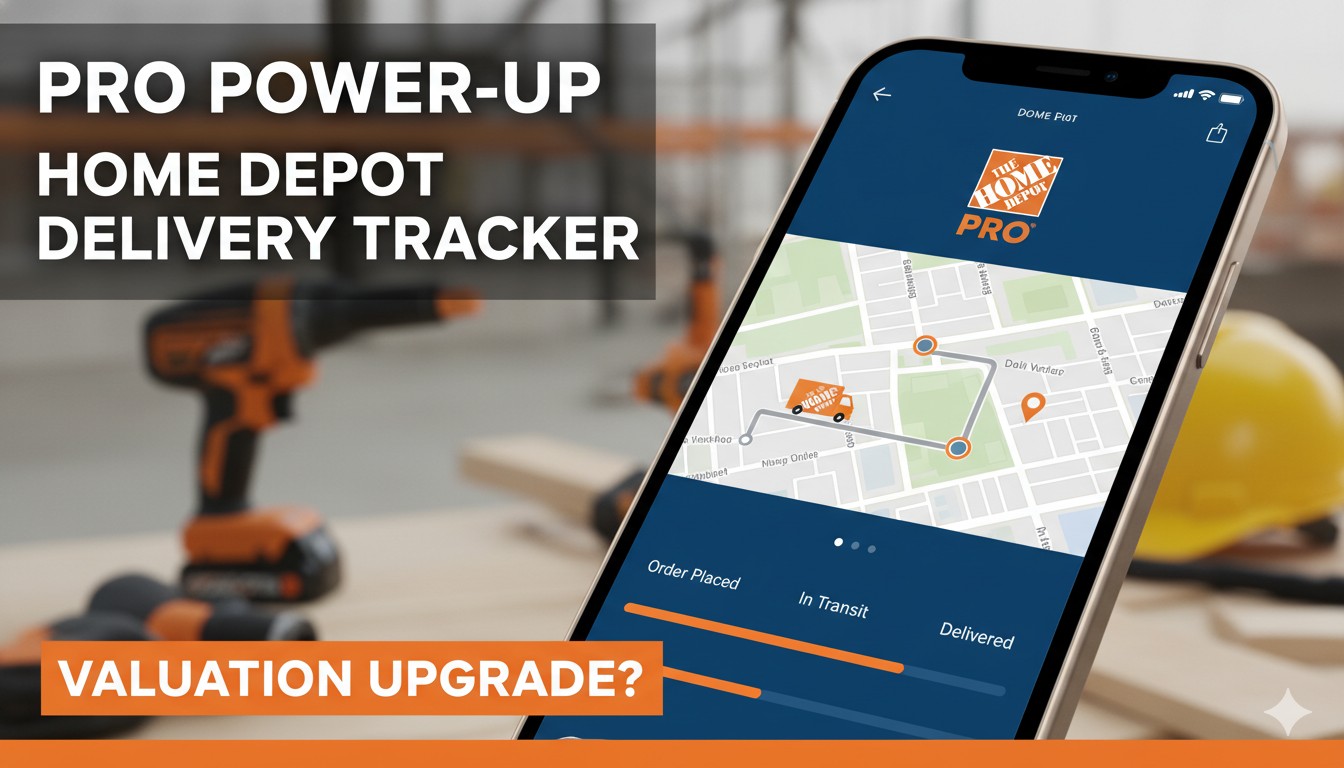
**” Home Depot’s launch of the industry’s first real-time delivery tracker for large construction items targets Pro customers with minute-by-minute GPS updates, truck route visibility, and precise ETAs to minimize jobsite downtime. This initiative builds on recent supply chain enhancements and aims to boost loyalty in a high-value segment, even as shares trade at a premium with concerns over modest growth projections and margin pressures in a challenging housing market. “**
Home Depot Delivery Tracker Aims To Deepen Pro Ties Despite Valuation Concerns
The Home Depot has announced a major enhancement to its delivery capabilities with the upcoming launch of the industry’s first real-time delivery tracker dedicated to big and bulky materials. Set to go live by the end of the first quarter of 2026, this feature addresses a longstanding pain point for professional customers—unpredictable arrival times for heavy items like lumber, drywall, concrete bags, and other construction essentials.
Professional contractors, often referred to as “Pros” in Home Depot’s ecosystem, rely on timely and reliable deliveries to keep multimillion-dollar projects on schedule. Delays in flatbed shipments can translate to lost productivity, idle crews, and cascading disruptions involving subcontractors and timelines. The new tracker changes that dynamic by providing live, minute-by-minute updates directly through the Home Depot mobile app and homedepot.com platform.
Users will gain full visibility into the delivery truck’s current location, its route, the number of remaining stops before arrival, and an accurate estimated time of arrival (ETA). This level of transparency extends beyond what has traditionally been available for smaller parcel deliveries, bringing the same convenience Pros expect from consumer-oriented services to large-scale building material orders.
The technology is powered by the recently introduced Home Depot Driver Handheld application. This tool equips drivers with devices that transmit real-time GPS data from the truck cab straight to the customer’s interface. It builds on prior investments in order management, last-mile logistics, and communication tools that have already improved delivery reliability across the board.
Executives have emphasized that this rollout is part of a broader strategy to eliminate friction in the customer experience. By giving Pros greater control and predictability, Home Depot aims to free up contractors’ time for core work—coordinating teams, managing inventory, and executing builds—rather than waiting around job sites. The feature is expected to enhance planning precision for complex projects, where even small improvements in efficiency can yield substantial bottom-line benefits.
This move aligns with Home Depot’s ongoing focus on the Pro segment, which has consistently outperformed the DIY side in recent periods. Pros tend to place larger, more frequent orders and show higher loyalty when supported by specialized tools. Recent efforts, including expanded digital planning resources and acquisitions to bolster wholesale distribution, underscore the company’s commitment to capturing more share in contractor spending.
The tracker arrives at a time when Home Depot is navigating a softer home improvement market influenced by elevated mortgage rates, reduced housing turnover, and cautious consumer sentiment. Comparable sales growth has been modest, with guidance pointing to flat to up 2% for the current fiscal year. Total sales are projected to rise in the 2.5% to 4.5% range, while operating margins are expected to hover around 12.4% to 12.6% on an adjusted basis.
Despite these headwinds, investments in Pro-focused innovations like the delivery tracker are viewed as long-term drivers of engagement and incremental revenue. Enhanced reliability and communication can lead to greater wallet share among contractors, who value seamless experiences that help them maintain project momentum.
Current Market Position and Valuation Dynamics
Home Depot’s stock (NYSE: HD) currently trades around $362, reflecting a market capitalization exceeding $360 billion. The shares sit roughly in the middle of their 52-week range, down from highs above $426 but well above lows near $326.
Analyst perspectives highlight a mixed picture. Consensus price targets cluster around $410, suggesting potential upside, though some models point to fair value estimates as low as $335. The price-to-earnings ratio remains elevated compared to historical averages, raising questions about whether current multiples fully account for near-term growth constraints.
Concerns center on the inability to quickly return to peak operating margins amid macro pressures and integration costs from recent strategic moves. While the Pro segment offers resilience—driven by commercial and renovation demand that is less sensitive to consumer discretionary spending—the broader environment demands careful execution.
The delivery tracker represents a tangible example of how Home Depot is addressing customer needs to build competitive advantages. By pioneering this capability in the home improvement space, the company positions itself to deepen ties with high-value Pros, potentially offsetting softer trends elsewhere.
As the feature rolls out across the network, its adoption among contractors will serve as an important indicator of success in translating technological investment into sustained loyalty and sales momentum.
Disclaimer: This article is for informational purposes only and does not constitute investment advice, financial recommendations, or a solicitation to buy or sell securities. Market conditions can change rapidly, and past performance is not indicative of future results. Readers should conduct their own research and consult qualified professionals before making investment decisions.