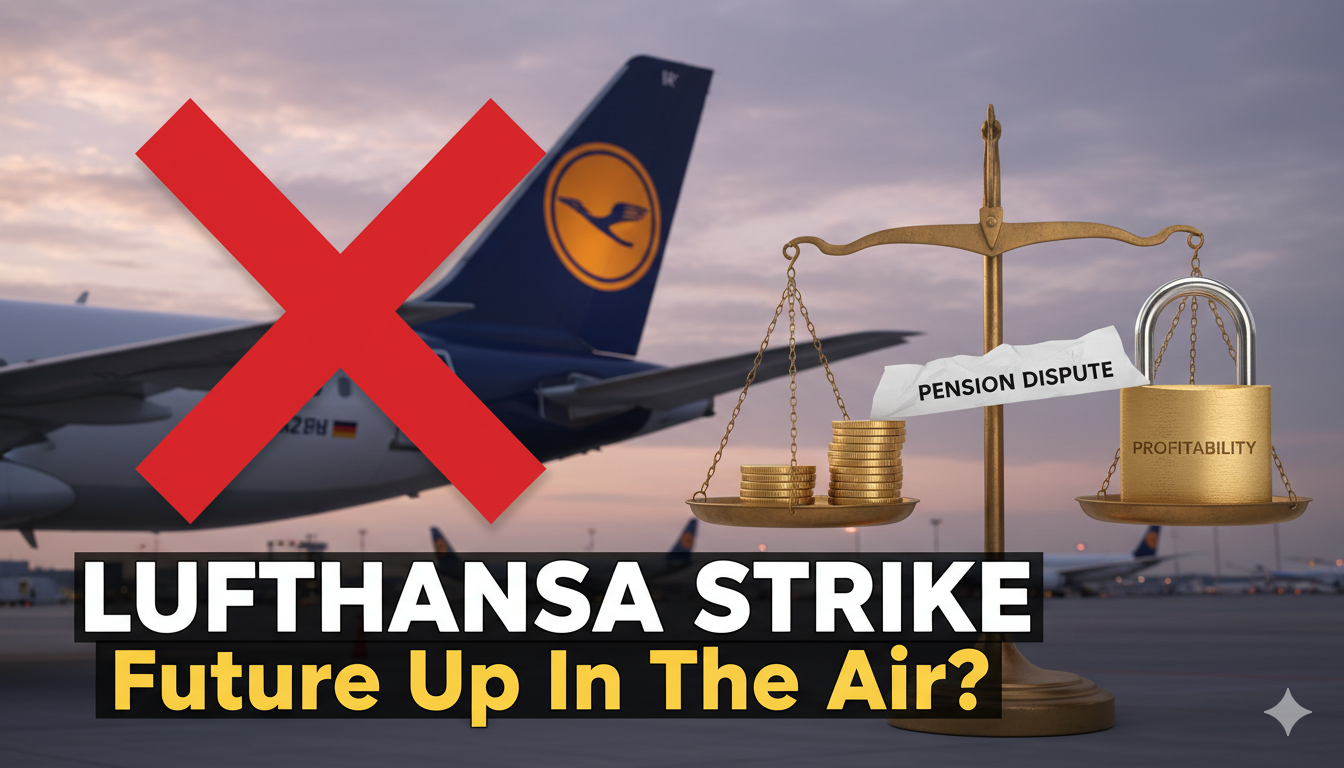
“A 24-hour strike by pilots and cabin crew on February 12, 2026, disrupted hundreds of Lufthansa flights departing from German airports, highlighting the ongoing pension conflict with unions. Pilots demand higher employer contributions to retirement schemes amid a shift from guaranteed benefits to market-linked models, while the airline cites limited financial flexibility due to debt management and cost pressures. The action underscores broader challenges to Lufthansa’s profitability recovery, with analysts estimating short-term revenue losses around €27 million from a single day of disruption and potential annual profit impacts exceeding €90-100 million if demands are met fully.”
Lufthansa Strike Disrupts Operations Amid Deepening Pension Battle
The latest labor action at Deutsche Lufthansa AG has once again brought the carrier’s core challenges into sharp relief. On February 12, 2026, pilots represented by the Vereinigung Cockpit union, along with cabin crew from the UFO union, staged a coordinated 24-hour walkout. This affected all departures from German airports under the main Lufthansa brand and Lufthansa Cargo, leading to widespread cancellations and stranding tens of thousands of passengers.
The primary trigger for the pilots’ strike stems from a long-running disagreement over the company’s pension scheme. Negotiations began intensifying in May 2025 but collapsed after seven rounds failed to bridge the gap. The union has pushed for substantial improvements, including a reported increase in monthly employer contributions of up to €2,400 per pilot (based on base salaries around €10,000 plus allowances). This would aim to restore more secure retirement benefits, countering the capital market-financed model introduced in 2017, which shifted away from traditional defined benefit guarantees toward defined contribution arrangements tied to investment performance. Pilots argue this exposes them to greater risk in retirement security, especially in volatile markets.
Cabin crew actions, while separate, compounded the disruption. The UFO union focused on issues at Lufthansa CityLine, including planned operational changes, job protection, and refusal to negotiate social plans amid restructuring efforts. Lufthansa has maintained that its core airline remains under profitability pressure, with no room for major concessions that could add significant ongoing costs—potentially €228 million annually from full pilot pension adjustments alone, according to some estimates.
This strike arrives against a backdrop of fragile operational and financial recovery for Lufthansa. The group has been navigating post-pandemic headwinds, including aircraft delivery delays, rising costs, and competitive pricing in key markets. Recent performance shows progress but persistent vulnerabilities. In the first nine months of 2025, the Lufthansa Group reported revenue of €29.6 billion, up 5% year-over-year, driven by passenger demand and cargo strength. Adjusted EBIT reached €1.48 billion, a 26% improvement from the prior period, with the third quarter alone delivering €1.33 billion in operating profit—broadly in line with expectations despite a slight margin dip to 11.9%.
Full-year 2025 guidance remains optimistic, with management confirming expectations for Adjusted EBIT significantly above the 2024 level of around €1.6 billion. Passenger numbers grew modestly, with load factors holding strong at over 83%, and cargo volumes expanded. However, the core Lufthansa Airlines segment continues to lag behind group peers in efficiency and margins, often described internally as the “problem child.” Cost control, debt reduction, and targeted capacity growth of around 4% into 2026 are central to the strategy.
The pension dispute amplifies these pressures. Meeting union demands could impose recurring hits to profitability at a time when the group is prioritizing balance sheet strengthening and shareholder returns. Analysts have pegged a one-day strike’s direct revenue loss at roughly €27 million, excluding rebooking expenses, passenger compensation under EU regulations, and reputational fallout. Escalation risks further disruptions, especially if talks remain stalled.
Lufthansa’s stock has reflected the uncertainty. The ADR (DLAKY) traded around $10.50 recently, down from highs near $11.29 over the past year, with shares sensitive to labor news and earnings volatility. Broader market dynamics, including fuel prices, currency fluctuations, and geopolitical factors, add layers of complexity.
Key operational metrics underscore the stakes:
Passenger traffic: Over 103 million passengers in the first nine months of 2025, up 2%.
Capacity (ASK): Up 4%, with revenue seat-kilometers following suit.
Cargo: Revenue tonne-kilometers up 7%, supporting diversification.
Net indebtedness: Stable around €5.1 billion, with pension obligations reduced to €2.13 billion.
The airline has criticized the strike as disproportionate and unnecessary, urging a return to negotiations while emphasizing limited fiscal headroom. Unions, meanwhile, view the action as essential leverage after prolonged deadlocks.
This episode highlights the tension between labor demands for security and corporate imperatives for sustainable profitability. As Lufthansa pushes toward an 8-10% Adjusted EBIT margin target by the late 2020s, resolving such disputes without eroding gains will be critical. The outcome could shape not only near-term operations but the carrier’s ability to compete effectively in a consolidating European aviation landscape.
Disclaimer: This is a news report based on current developments in the aviation industry. It is for informational purposes only and does not constitute financial, investment, or legal advice.