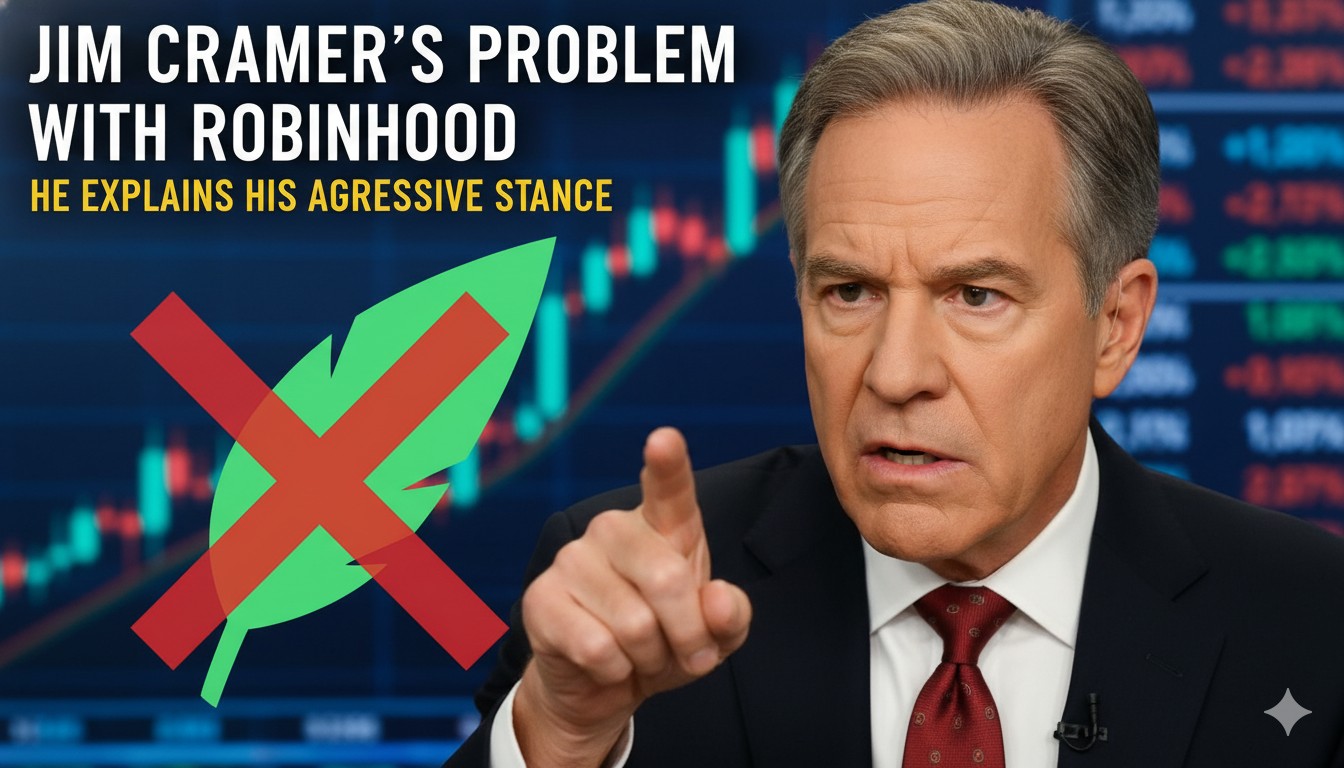
“Here’s my problem with Robinhood. It sells at 30 times earnings, but it has way too much business that I think is crypto. And until they get so that the balance is less crypto and more say equities and bonds, I think it’s going to be too volatile, and it’s going to trade like Bitcoin. … So Robinhood may be the repository of something that’s become toxic, and I think a lot less dependable.”
Jim Cramer’s Critique of Robinhood’s Crypto Dependency
CNBC’s Jim Cramer has once again turned his spotlight on Robinhood Markets (HOOD), the popular retail brokerage platform that revolutionized commission-free trading for a new generation of investors. In recent commentary on Mad Money, Cramer expressed clear reservations about the stock, focusing on what he sees as an overreliance on cryptocurrency-related revenue driving excessive volatility.
Cramer pointed out that Robinhood currently trades at a premium valuation—around 30 times earnings—yet a significant portion of its business remains tied to crypto trading volumes. This linkage means the stock often moves in tandem with Bitcoin and other digital assets rather than reflecting more stable traditional brokerage activities like equities and fixed income. He noted that even after short-term rebounds in crypto prices, the underlying correlation persists, leaving investors unnerved by the lack of diversification in revenue streams.
This concern comes amid broader market dynamics where cryptocurrency has faced renewed scrutiny. Bitcoin’s price swings have challenged its narrative as a reliable store of value or inflation hedge, particularly during periods of dollar weakness or broader asset sell-offs. Cramer suggested that when crypto falters, Robinhood bears the brunt, acting almost as a proxy for digital asset sentiment rather than a diversified financial services firm. He described the situation as potentially “toxic” for dependability, implying that the platform’s fortunes remain too closely aligned with a high-risk, unpredictable sector.
Robinhood has built its brand around appealing to younger, tech-savvy users who embrace speculative assets, including meme stocks and cryptocurrencies. The company’s expansion into crypto trading, wallet services, and related features has boosted user engagement and transaction-based fees during bull runs in digital currencies. However, this model exposes the firm to sharp downturns when enthusiasm wanes, as seen in recent performance.
As of the latest trading data, HOOD shares are fluctuating in the mid-to-high $70s range, with a market capitalization exceeding $70 billion. The stock has experienced significant volatility, with a 52-week range spanning from the low $30s to peaks above $150. Year-to-date performance has lagged broader indices like the S&P 500, reflecting investor caution around its crypto exposure amid fluctuating digital asset prices.
Cramer emphasized that until Robinhood shifts its revenue mix toward more traditional brokerage products—such as margin lending, options trading in equities, retirement accounts, or bond offerings—the stock will likely continue to mirror Bitcoin’s movements. This makes it less appealing for investors seeking stability in a brokerage play.
Key Valuation and Performance Metrics
Current Price Range : Approximately $76–$78 (recent session highs/lows around $78.63 / $76.45)
Market Cap : Over $70 billion
P/E Ratio : Around 30–38x (forward-looking estimates vary)
52-Week High/Low : $153.86 / $29.66
Recent Trend : Down substantially from peaks, with ongoing pressure from crypto market softness
Broader Implications for Retail Investors
For the millions of retail traders using Robinhood, Cramer’s comments highlight a structural challenge: the platform excels at democratizing access to markets, including emerging ones like crypto, but this comes at the cost of heightened stock price swings for shareholders. Traditional brokerages with more balanced revenue—think established names with heavy institutional and wealth management focus—tend to offer steadier performance.
Cramer has shown mixed views on Robinhood over time, occasionally praising its long-term potential in capturing younger demographics and innovation in trading tools. Yet his current stance underscores caution in the near term, driven by the crypto overhang. Investors watching HOOD should monitor upcoming earnings reports for signs of revenue diversification, particularly growth in non-crypto segments like equities trading volume or new product launches.
The debate reflects larger questions in financial markets: Can a brokerage thrive long-term on speculative trading, or does true sustainability require a pivot toward more predictable income sources?
Disclaimer : This is for informational purposes only and not investment advice. Market conditions can change rapidly, and past performance is no guarantee of future results. Always conduct your own research.